TL;DR
The Culture Map by Erin Meyer offers eight scales for understanding how national cultures differ at work. This article breaks down each of the book's eight chapters, explains the scale behind it, and shares my own highlights. It also links to my data visualisation project, The Culture Map, Visualised.
Who should read this?
This is for managers and professionals working with multinational teams, giving feedback across cultures, negotiating with international clients, leading a hierarchy you did not design, or wanting to understand why a colleague's "yes" does not always mean yes.

Introduction
Erin Meyer is a professor at INSEAD who studies how culture shapes communication, leadership, and decision-making at work. The Culture Map, published in 2014, explains why two equally skilled professionals can misread each other completely, simply because they come from different cultures.
Meyer's central idea is that "it is not a question of culture or personality, but of culture and personality." Culture sets the range within which personality plays out. She also stresses that what matters is not where a culture sits in absolute terms, but "the relative position of the two cultures," since that is what shapes how people view one another.
Communicating Across Cultures
This chapter introduces the Communicating scale, from low-context to high-context. Low-context cultures value explicit, literal messages; the United States sits at this extreme, followed by Canada, Australia, the Netherlands, Germany, and the UK. High-context cultures like Japan, China, and India expect listeners to read between the lines: "in Japan if you can't read the air, you are not a good listener."
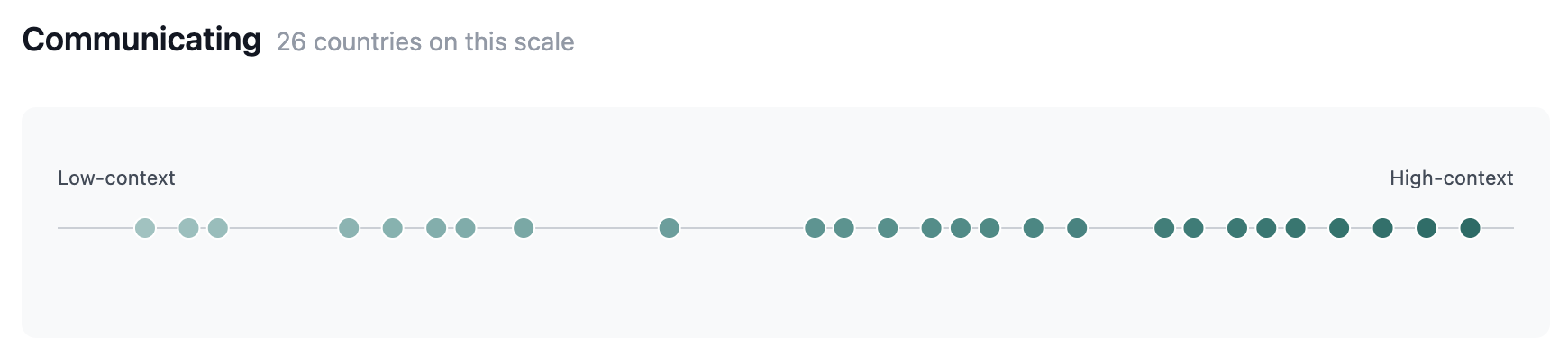
Sophistication works in opposite directions here. In low-context cultures, the clearest communicators are seen as most skilled. In high-context cultures, the most educated rely more on implicit, layered messages. Meyer's advice: "listen before you speak and learn before you act." For mixed teams, her rule is "multicultural teams need low-context processes."
This scale is one of the interactive visuals in my data visualisation project, The Culture Map, Visualised. It explains much of the daily friction in meetings and writing.
Evaluating Performance and Giving Feedback
This chapter covers the Evaluating scale: how directly people deliver negative feedback. It is separate from Communicating. As Meyer notes, "stereotypes about how directly people speak generally reflect their cultures' position on the Communicating scale, not the Evaluating scale," which is why Americans seem direct but give softer criticism than many Europeans.
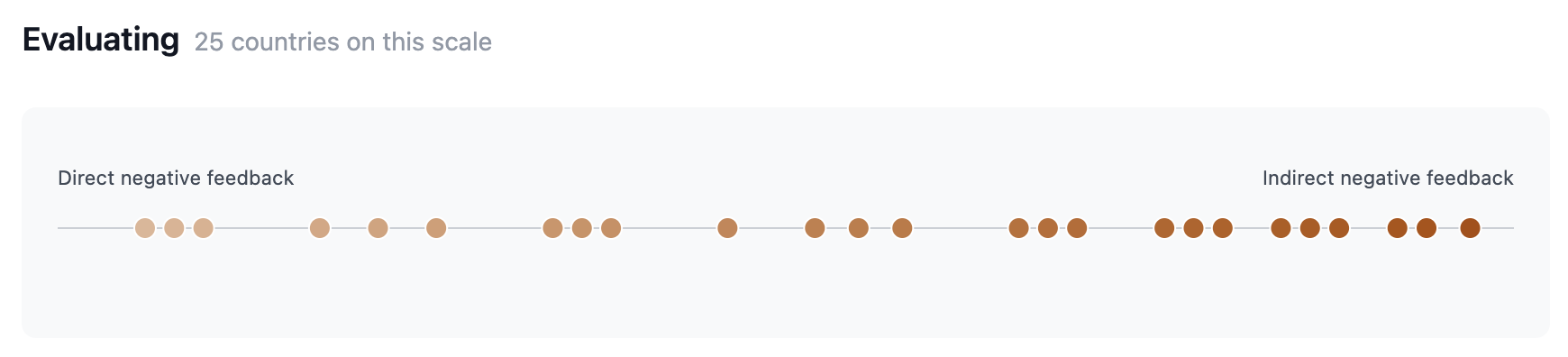
Direct cultures like the Netherlands and Israel use "upgraders" (absolutely, totally) to sharpen criticism. Indirect cultures use "downgraders" (sort of, slightly) to soften it. A memorable highlight: the pilot who calmly announced "we have a small problem in that all four engines have failed," classic British downgrading.
Meyer's strategies differ by culture. For direct cultures, be explicit but lead with genuine appreciation. For indirect cultures, especially in Asia: give feedback gradually over time, soften it with food or drink, or simply say the good and leave out the bad.
The Art of Persuasion in a Multicultural World
Chapter three covers the Persuading scale: principles-first (deductive) versus applications-first (inductive) reasoning. Principles-first cultures, common in Germany and France, want theory before application: "in Germany, we try to understand the theoretical concept before adapting it to the practical situation." Applications-first cultures want the practical tool first.
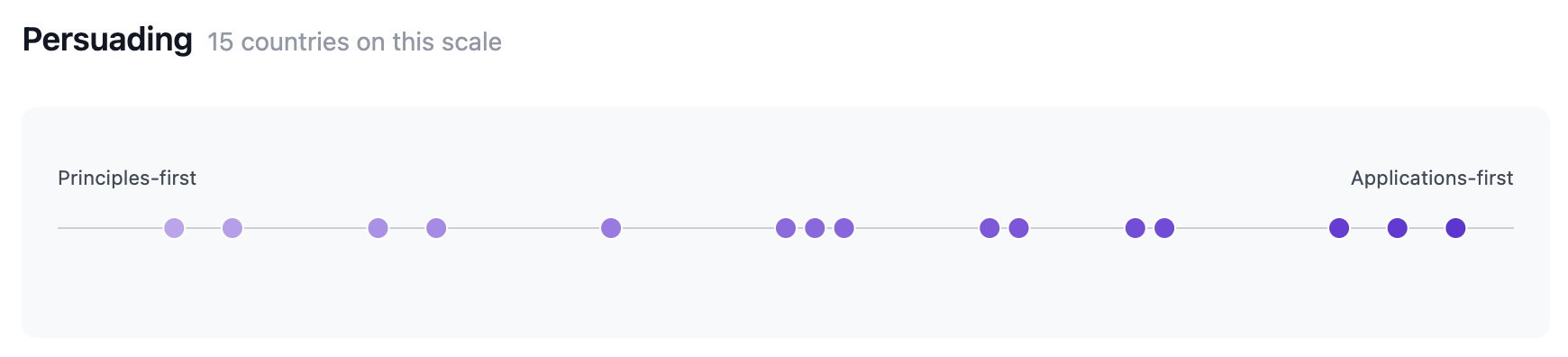
This chapter also introduces holistic versus specific thinking. Studies found Americans focus on the main object in a scene, while the Japanese focus on the background and relationships. As Meyer puts it, "Chinese people think from macro to micro, whereas Western people think from micro to macro." For efficiency over innovation, she notes "it is simply better to leave Rome to the Romans."
Leadership, Hierarchy, and Power
This chapter introduces the Leading scale, from egalitarian to hierarchical, built on power distance: "the extent to which the less powerful members of organisations accept and expect that power is distributed unequally." Countries once shaped by Roman rule tend to be more hierarchical today; those shaped by Viking culture rank among the most egalitarian.
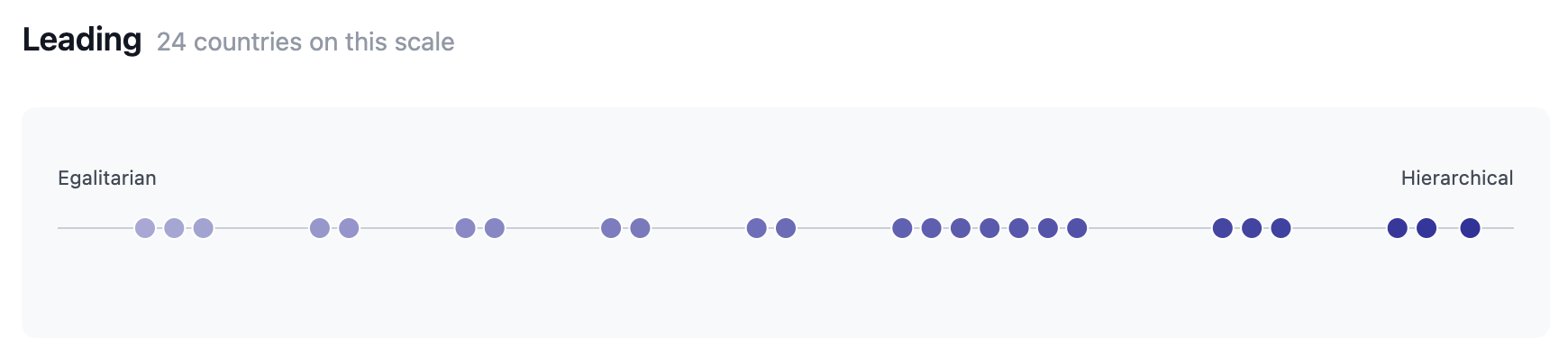
Most managers claim to prefer an egalitarian style, but "evidence from the cross-cultural trenches shows another story." Meyer also reframes Confucian hierarchy: it includes "the heavy responsibility of the higher person to protect and care for those under him." For leaders wanting more input from hierarchical teams, she suggests inviting people to speak and rotating who leads meetings.
Who Decides and How?
This chapter covers the Deciding scale: separate from Leading, and easy to confuse with it. Leading is about emotional distance between boss and team. Deciding is about who makes the final call, one person (Big D) or the group (little d).
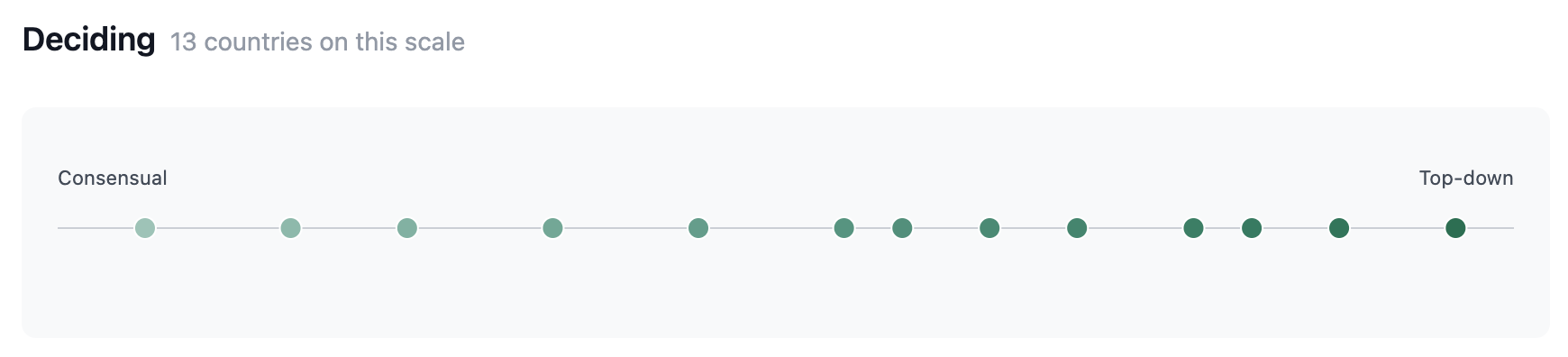
These scales can decouple. Japan is highly hierarchical on Leading, yet highly consensual on Deciding, using group input (nemawashi) before the top finalises a decision. Do not assume a flat culture decides quickly; sometimes the flattest cultures take longest, because everyone weighs in first.
Two Types of Trust and How They Grow
This chapter introduces the Trusting scale. Cognitive trust is "based on the confidence you feel in another person's accomplishments, skills, and reliability." Affective trust "arises from feelings of emotional closeness, empathy, or friendship." Task-based cultures separate the two; relationship-based cultures weave them together.
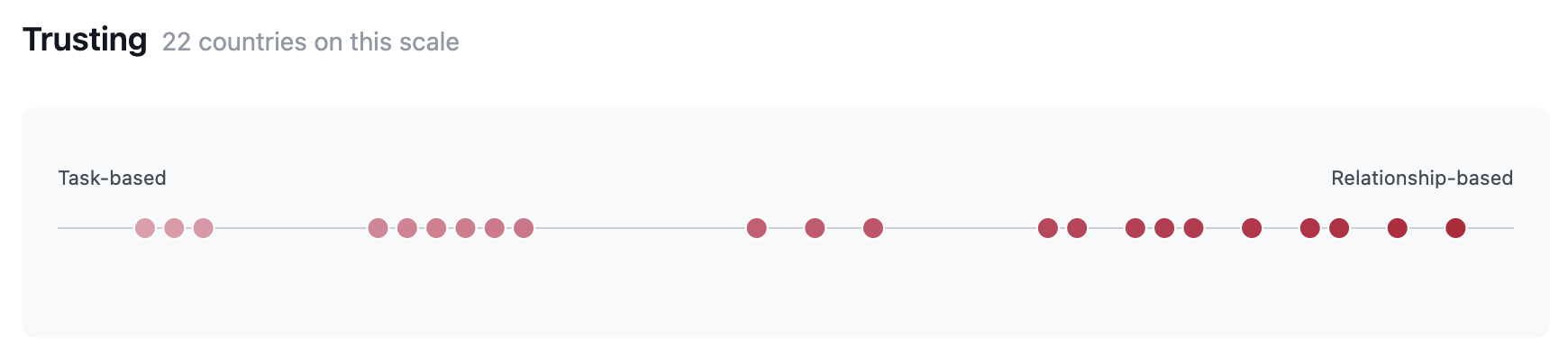
The peach and coconut analogy explains this well. Peach cultures like the US are soft with strangers, but friendliness does not equal friendship. Coconut cultures are closed at first, but "as you do [get through the shell], people will become gradually warmer," and the bond lasts longer once built. As Meyer sums up: "in many cultures, the relationship is your contract."
Disagreeing Productively
Chapter seven covers the Disagreeing scale, from confrontational to conflict-avoidant. In confrontational cultures like France and Israel, open debate is healthy: "with confrontation, you reach excellence, you have more creativity, and you eliminate risk." In conflict-avoidant cultures, especially in China, "protecting another person's face is more important than stating what you believe is correct."
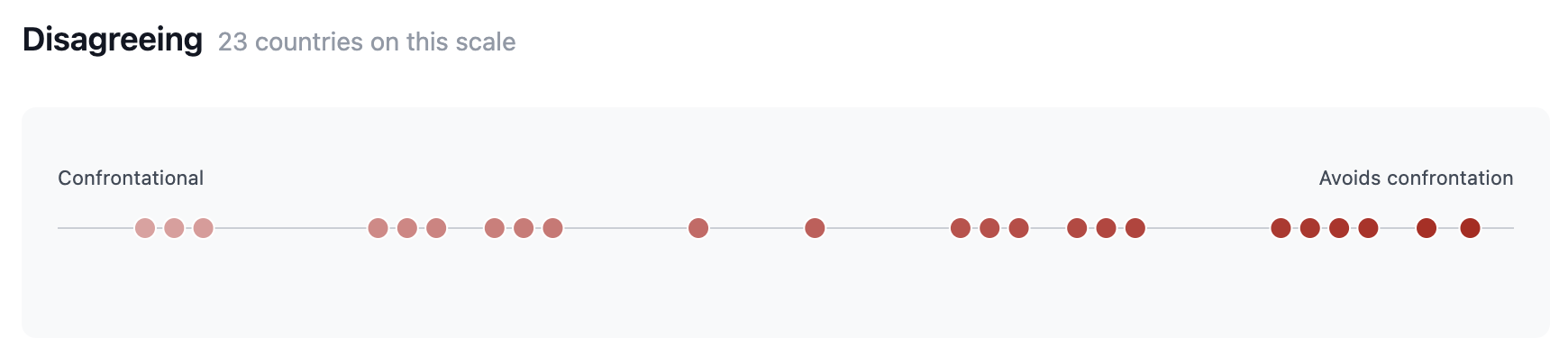
For drawing out honest views from conflict-avoidant teams, Meyer suggests giving advance notice before asking for opinions, and separating the idea from the person proposing it. The same upgraders and downgraders from chapter two reappear here too.
Scheduling and Cross-Cultural Perceptions of Time
The final scale is Scheduling, based on Edward Hall's monochronic (M-time) and polychronic (P-time) cultures. Linear-time cultures treat schedules as fixed; distractions are "just plain rude." Flexible-time cultures treat schedules as a rough guide, and their best meetings "grow in unpredictable ways."
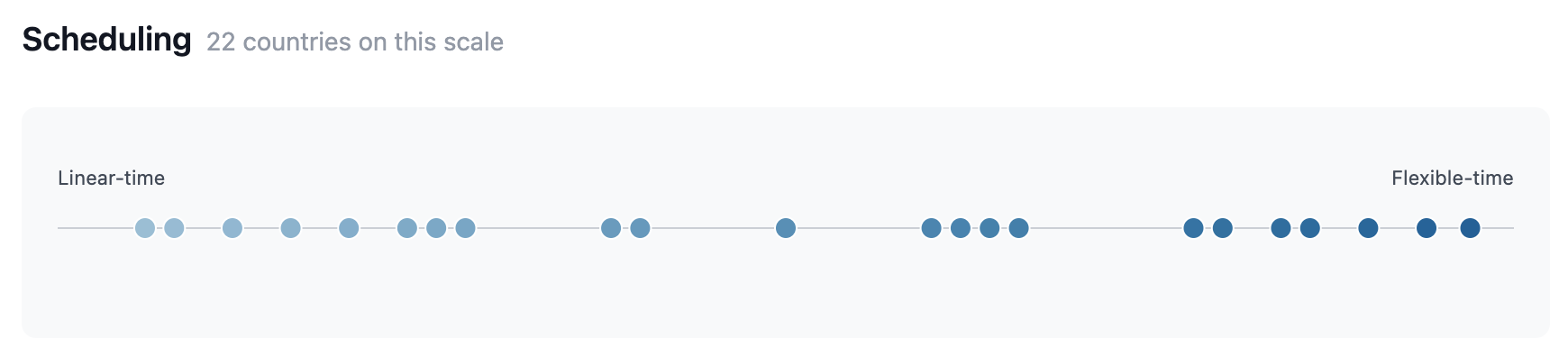
This scale ties closely to how predictable daily life is, and how much relationships matter relative to the task. Meyer's advice: "style switching is an essential skill for today's global manager," and teams adapt well if the leader sets an explicit shared culture.
All Scales Together
The book closes by plotting all eight scales into a single culture map for each country. Meyer's warning: "just as fish don't know they're in water, people often find it difficult to see and recognise their own culture until they start comparing it with others." She also cautions that "every individual is different," so culture only explains part of the picture.
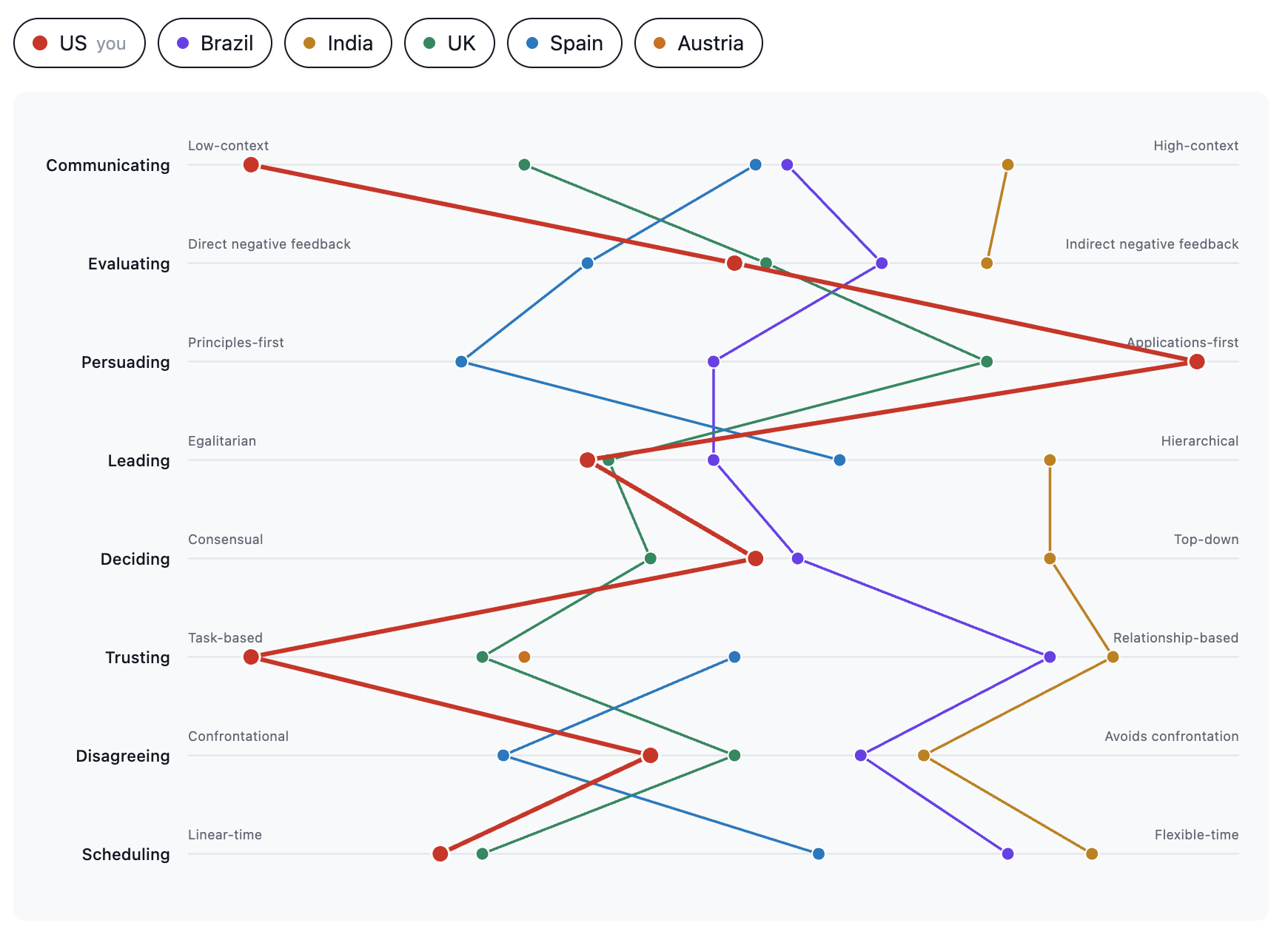
This synthesis inspired my own project, The Culture Map, Visualised. It lets you choose your nationality and your teammates' nationalities, then generates an interactive view across all eight scales, similar to the maps in the book. Seeing your team's combined gaps on one chart is far more useful than reading about any single scale alone.
Before Closing
Concepts in The Culture Map is not about stereotyping people. It asks you to focus the invisible defaults you bring to every meeting and adjust deliberately. The eight scales give you a shared language for naming what is really going on. Check out The Culture Map, Visualised, where these ideas become an interactive tool for your own team.